Category: Patent Basics

  • What Rights Does a Patent Actually Grant?

    Quick Answer

    A patent does not grant the right to make, use, or sell an invention. Instead, a patent grants the right to exclude others from making, using, selling, offering for sale, or importing the claimed invention for a limited period of time.

    In other words, a patent is a legal monopoly on the claimed invention, enforced through the courts. If someone practices the patented invention without permission, the patent owner can file a patent infringement lawsuit seeking damages and possibly an injunction to stop the activity.

    This distinction is important: a patent is a defensive legal right, not a government-issued license to practice the technology. Many patented inventions cannot legally be practiced without permission from other patent holders.


    Why This Matters

    New inventors often assume that receiving a patent means they are free to manufacture and sell their product. That is not necessarily true. A product can fall within the scope of multiple patents, meaning the patent owner may still need licenses from others before practicing the invention.

    For patent professionals—assistants, paralegals, agents, and attorneys—this concept affects several key aspects of practice:

    • Claim drafting focuses on defining the scope of the exclusion right.
    • Patent searches determine whether practicing an invention might infringe other patents.
    • Licensing negotiations revolve around permission to practice patented technology.
    • Litigation and enforcement rely on the exclusive rights granted by the patent.

    In short, patents function as property rights in technology, allowing the owner to control who can use the claimed invention.


    Detailed Explanation

    Definition

    Under U.S. patent law, a patent grants the patent owner the right to exclude others from:

    • making the invention
    • using the invention
    • selling the invention
    • offering the invention for sale
    • importing the invention into the United States

    These rights apply only to the invention defined in the patent claims, not everything described in the specification.

    After it is granted, a patent typically lasts:

    • 20 years from the earliest non-provisional filing date for utility patents
    • 15 years from issuance for design patents

    During this time, the patent owner can enforce the patent against infringers.


    How It Works

    The patent system is built around a trade-off.

    Inventors disclose their inventions publicly in exchange for a limited period of exclusivity.

    The process typically works like this:

    1. An inventor files a patent application describing the invention.
    2. The patent office examines the application to determine whether it meets legal requirements such as novelty and non-obviousness.
    3. If allowed, the application becomes a granted patent.
    4. The patent owner now holds the legal right to exclude others from practicing the claimed invention.

    If another party practices the claimed invention without permission, that activity may constitute patent infringement.

    Enforcement typically occurs through civil litigation in federal court, where the patent owner must prove infringement.


    Key Components

    Several elements define the scope of what a patent actually grants.

    1. Patent Claims

    The claims define the legal boundary of the invention.

    Think of claims as the property lines of the patent. Everything inside those boundaries is protected.

    The specification may describe many variations of the invention, but the claims determine what is legally covered.

    Example structure of a claim:

    • A system comprising:
      • component A
      • component B
      • component C configured to perform function D

    If another product includes each and every element of that claim (or an equivalent), it may infringe the patent.


    2. The Right to Exclude

    A patent does not provide affirmative rights.

    Instead, it allows the owner to prevent others from practicing the invention.

    The patent owner may choose to:

    • manufacture the invention
    • license it to others
    • sell the patent rights
    • enforce it through litigation
    • do nothing at all

    The patent owner does not have to practice the invention themselves.


    3. Territorial Scope

    Patents are territorial rights.

    A U.S. patent applies only within the United States and its territories.

    Other countries require separate patent filings. For example:

    • U.S. patent → enforceable in the United States
    • European patent → enforceable in designated European countries
    • Japanese patent → enforceable in Japan

    Global patent protection usually involves multiple filings coordinated through systems like the Patent Cooperation Treaty (PCT).


    4. Limited Duration

    Patent rights are temporary.

    Most utility patents expire 20 years from the earliest non-provisional filing date, though the exact expiration date can be affected by:

    • Patent Term Adjustment (PTA) for USPTO delays
    • Patent Term Extension (PTE) for certain regulated products
    • maintenance fee payments

    Once the patent expires, the invention enters the public domain, and anyone can use it freely.


    The legal effect of a patent is the ability to bring an infringement action.

    If someone practices the patented invention without authorization, the patent owner may seek:

    • monetary damages
    • lost profits or reasonable royalties
    • enhanced damages for willful infringement
    • injunctive relief preventing continued infringement

    However, enforcement is the patent owner’s responsibility. The government does not automatically enforce patents.

    This is why patents are often described as private property rights, similar to land ownership.


    Real Example

    Imagine a company receives a U.S. patent for a new battery-cooling system for electric vehicles.

    The patent claims a cooling structure that:

    • routes coolant through a specific channel geometry
    • improves heat transfer from battery cells
    • reduces overheating during rapid charging

    Once the patent issues, the company can exclude competitors from using that cooling structure.

    If another manufacturer sells an electric vehicle battery pack using the same cooling configuration, the patent owner could potentially sue for infringement.

    However, the patent owner might not be able to use the invention freely themselves.

    Why?

    Because another company might hold an earlier patent covering:

    • the underlying battery architecture
    • the coolant circulation system
    • the battery module structure

    In that situation, both parties might need cross-licenses to commercialize their technologies.

    This situation is common in industries like:

    • semiconductors
    • telecommunications
    • pharmaceuticals
    • automotive technology

    Multiple overlapping patents often cover different aspects of complex products.


    Practical Takeaways

    • A patent grants the right to exclude others, not the right to practice the invention.
    • The claims define the legal scope of the patent.
    • Patent rights are territorial, applying only in the country where the patent is issued.
    • Most utility patents last 20 years from the filing date, subject to adjustments.
    • Patent owners must enforce their rights themselves, typically through litigation.
    • Complex products often involve multiple overlapping patents owned by different parties.

    Tool Tip

    When reviewing a patent to understand what rights it grants, start by reading the claims section carefully. The claims determine what is legally protected.

    Tools like Patent Toolkit or PatPDFs can help you quickly open patent PDFs, navigate claim sections, and inspect the structure of issued patents and published applications. This makes it easier to analyze claim scope during patent searches or infringement evaluations.

  • What Is the Lifecycle of a Patent Application?


    Quick Answer

    The lifecycle of a patent application describes the full process from the filing of a patent application through examination and final resolution by the U.S. Patent and Trademark Office (USPTO). The process typically begins with filing a non-provisional patent application, which may claim priority to an earlier provisional patent application. The application then proceeds through USPTO examination and usually publication.

    During prosecution, the application may go through one or more rounds of Office Actions and applicant responses before reaching a final outcome. An application may ultimately issue as a patent, or it may be abandoned during prosecution if the applicant decides not to continue or fails to respond to the USPTO.

    If a patent does issue, the lifecycle continues into a post-grant phase. During this phase, the patent owner must pay maintenance fees to keep the patent in force. If those fees are not paid, the patent expires early. Otherwise, the patent generally expires 20 years from the earliest non-provisional filing date, subject to possible adjustments such as Patent Term Adjustment (PTA).

    The diagram above illustrates the major stages in this lifecycle—from initial filing through examination, patent issuance, maintenance fees, and eventual expiration.


    Why This Matters

    Understanding the lifecycle of a patent application is essential for patent applicants and anyone working with patent documents or managing patent filings.

    Patent assistants and IP paralegals must track critical deadlines throughout the lifecycle. These include provisional conversion deadlines, Office Action response deadlines, issue fee deadlines, and maintenance fee payments. Missing one of these deadlines can result in abandonment of the application or early expiration of the patent.

    The lifecycle also explains what happens during the often lengthy “patent pending” period. Patent prosecution can take several years, and understanding the steps involved helps practitioners interpret USPTO communications and patent file histories.

    More broadly, the lifecycle determines when patent rights begin, how long they last, and what actions are required to maintain them. Anyone reviewing patents—whether for litigation, licensing, or technology analysis—must understand where a particular patent sits within this lifecycle.


    Detailed Explanation

    Definition

    The lifecycle of a patent application refers to the sequence of stages that occur from the filing of a patent application through examination, potential issuance of a patent, maintenance of that patent, and eventual expiration.

    The lifecycle generally includes two phases:

    1. Pre-grant phase
      The period when the patent application is pending before the USPTO.
    2. Post-grant phase
      The period after a patent issues and remains in force until it expires.

    The timeline diagram illustrates these stages along a typical patent lifecycle.


    How It Works

    A typical U.S. patent application progresses through several major stages.


    1. Provisional Filing (Optional)

    Many inventions begin with a provisional patent application, shown at the far left of the diagram.

    A provisional application:

    • establishes an early priority date
    • is not examined by the USPTO
    • expires after 12 months

    If the applicant wishes to continue pursuing patent protection, a non-provisional application must be filed within 12 months of the provisional filing (① in the diagram).

    If no non-provisional application is filed within that period, the provisional application simply expires and the invention is no longer considered patent pending.


    2. Non-Provisional Filing

    The non-provisional patent application is the formal application that the USPTO examines.

    It typically includes:

    • a specification describing the invention in detail
    • claims defining the legal scope of protection
    • drawings, if necessary to understand the invention
    • inventor information and declarations
    • required USPTO filing fees

    The filing date of the non-provisional application generally determines the 20-year patent term, measured from the earliest non-provisional filing date in the application’s priority chain.


    3. Awaiting Examination

    After filing, most applications enter a queue awaiting examination (②).

    The waiting period varies depending on factors such as:

    • the technology field of the invention
    • USPTO workload
    • whether expedited examination was requested

    In many technology areas, the first Office Action may occur one to three years after filing.


    4. USPTO Examination

    Once assigned, a USPTO examiner reviews the application and evaluates the claims for patentability in light of prior art.

    What qualifies as prior art generally depends on the application’s effective filing date. In the diagram above, this is typically the provisional filing date if a provisional was filed, or the non-provisional filing date if no provisional exists. More complex priority situations can arise with continuation, divisional, or continuation-in-part applications.

    The examiner may issue one or more Office Actions (③), which may include:

    • rejections based on prior art (35 U.S.C. §102 and §103)
    • rejections based on non-patentable subject matter (35 U.S.C. §101)
    • rejections or objections related to clarity or specification support (35 U.S.C. §112)
    • objections to drawings, specification formatting, or claim structure

    The applicant then responds to these Office Actions. This back-and-forth process between the USPTO and the applicant is known as patent prosecution.

    Eventually the application will be either:

    • allowed, after which the applicant pays an issue fee and the patent is granted, or
    • abandoned, either expressly or because required responses were not filed within the required time periods.

    Key Components

    Several important milestones appear in the patent lifecycle.


    Pre-Grant Publication

    Most U.S. patent applications are published 18 months after the earliest priority date (④).

    In the diagram, this may be 18 months from the provisional filing date or, if no provisional was filed, 18 months after the non-provisional filing date. More complex priority chains—such as continuations or divisionals—may affect this timing.

    Publication makes the application publicly available, allowing competitors, researchers, and patent professionals to review the disclosed technology.

    Applicants may request non-publication if they do not intend to seek foreign patent protection. In addition, if a patent issues before the 18-month publication date, the application is not separately published because the issued patent itself becomes public.


    Patent Pending Period

    From the filing of a patent application until the patent issues or the application is abandoned, products may be labeled “Patent Pending” (⑧).

    This status can begin as soon as a provisional or non-provisional application is filed. It indicates that patent protection is being pursued, although enforceable rights do not yet exist.


    Patent Issuance

    If the examiner determines that the claims meet the legal requirements for patentability, the USPTO allows the application and the patent eventually issues (grants).

    At that point:

    • the patent receives a U.S. patent number
    • enforceable rights begin
    • the patent enters the post-grant phase

    Products may then be marked “Patented” (⑨).


    Maintenance Fees

    To keep a U.S. utility patent in force after issuance, the patent owner must pay three maintenance fees.

    These are due at:

    • 3.5 years after grant (⑤)
    • 7.5 years after grant (⑥)
    • 11.5 years after grant (⑦)

    If these fees are not paid, the patent expires before the end of its full term.


    Patent Term Adjustment (PTA)

    The diagram also illustrates Patent Term Adjustment (PTA) accumulating during the awaiting examination and examination phases.

    Under U.S. patent law, the USPTO must meet certain examination deadlines. If the USPTO takes longer than those deadlines—for example, by delaying the first Office Action or taking too long to issue the patent—the patent owner may receive additional patent term in the form of PTA.

    PTA effectively extends the expiration date beyond the standard 20-year patent term. The adjustment accumulates during prosecution and is calculated by the USPTO when the patent issues.

    Not all delays generate PTA. Certain applicant actions—such as late responses to Office Actions—can reduce the amount of adjustment.

    The total PTA awarded is listed on the front page of the issued patent and in USPTO records.


    Patent Expiration

    A U.S. utility patent generally expires 20 years from the earliest non-provisional filing date, although this period may be extended by Patent Term Adjustment (PTA) when delays occur during USPTO examination (⑩).

    After expiration, the patented invention enters the public domain and may be freely used by anyone.


    Each stage of the lifecycle carries different legal consequences.

    Before Publication

    The non-provisional application is generally confidential. Only the applicant and the USPTO have access to it.

    If a provisional application is filed and no non-provisional application follows, the provisional application typically never becomes public.


    After Publication

    The non-provisional application becomes publicly available through the USPTO’s publication system. Competitors can analyze the invention and monitor the prosecution process.

    If a provisional application was filed, its contents may become publicly accessible through the published non-provisional application or issued patent that claims priority to it.


    After Issuance

    The patent owner gains enforceable patent rights and may license, sell, or assert the patent against infringers.


    After Abandonment or Expiration

    The invention enters the public domain and may be freely used by anyone.


    Real Example

    Consider a simplified example involving a hypothetical U.S. patent.

    April 10, 2023 – An inventor files a provisional patent application describing a new electric vehicle battery cooling system.

    April 9, 2024 – The inventor files a non-provisional patent application claiming priority to the provisional filing.

    October 2025 – The application is published, approximately 18 months after the earliest priority date.

    2026–2028 – The USPTO issues several Office Actions, and the applicant responds with claim amendments and arguments.

    July 2028 – The application is allowed, and the patent issues later that year.

    The patent owner must then pay maintenance fees at:

    • January 2032 (3.5 years after grant)
    • January 2036 (7.5 years after grant)
    • January 2040 (11.5 years after grant)

    If those fees are paid, the patent will typically expire April 9, 2044, which is 20 years from the non-provisional filing date.

    If delays occurred during USPTO examination, Patent Term Adjustment (PTA) may extend this expiration date.


    Practical Takeaways

    • A U.S. patent lifecycle begins with filing a patent application and ends with abandonment or expiration.
    • Provisional applications are optional but can establish an early priority date.
    • Patent applications usually publish after 18 months, although non-publication requests and early issuance may prevent publication.
    • Patent prosecution may involve multiple Office Actions and responses over several years.
    • After issuance, maintenance fees at 3.5, 7.5, and 11.5 years are required to keep the patent active.
    • The standard patent term is 20 years from the earliest non-provisional filing date, subject to adjustments such as Patent Term Adjustment (PTA).

    Tool Tip

    When reviewing a patent or patent application, identifying its place in the lifecycle usually requires checking key dates such as the filing date, publication date, issue date, and maintenance fee status.

    Tools like PatPDFs allow quick downloading and inspection of patent documents, while Patent Toolkit can help extract bibliographic data and key dates from patents and applications—making it easier to determine where a patent sits in its lifecycle.

  • I Have an Invention I’d Like to Patent. What Should I Know?

    If you’ve created something new—a product, a process, or a technical improvement—you may be wondering whether you should file a patent application.

    Patents can be powerful tools, but they are also widely misunderstood. Before spending time and money on the patent process, it’s important to understand what patents actually do, how the filing process works, and some common pitfalls that can destroy patent rights.

    This guide covers the key things inventors should know before starting the patent process.


    What a Patent Actually Grants

    A common misconception is that a patent gives you the right to make or sell your invention.

    It doesn’t.

    A patent grants something slightly different: the right to exclude others from making, using, selling, offering for sale, or importing the invention covered by the patent claims. 

    In other words:

    A patent is a right to stop others, not necessarily a right to practice the invention yourself.

    For example:

    • Your invention might still infringe someone else’s earlier patent.
    • Regulatory rules might prevent you from selling the product.
    • Manufacturing may require additional licenses.

    Think of patents as a property right over a technology, similar to owning land. You can:

    • license it
    • sell it
    • enforce it against competitors

    But owning the right doesn’t automatically mean you can commercially use it without other permissions.


    The Two Main Categories of Patents

    Most inventors are thinking about utility patents, but it’s important to understand that design patents also exist.

    Utility Patents

    Utility patents protect how an invention works or how it is used. 

    They can cover things like:

    • mechanical devices
    • software processes
    • chemical compositions
    • manufacturing methods
    • electrical systems

    If you invent a new machine, algorithm, or technical process, you are usually pursuing a utility patent.

    Utility patents are the most common type of patent and generally last 20 years from the filing date.


    Design Patents

    Design patents protect how a product looks, rather than how it works. 

    Specifically, they protect the ornamental appearance of an article of manufacture, such as:

    • product shape
    • surface ornamentation
    • decorative patterns
    • graphical user interface designs

    For example:

    • the shape of a bottle
    • the ornamental design of a piece of furniture
    • the visual design of a consumer product

    A design patent protects the appearance shown in the patent drawings, and competitors may infringe if their product is substantially similar in appearance. 

    Design patents in the United States typically last 15 years from issuance.

    Importantly, the same product may have both types of protection:

    • a utility patent covering how the product works
    • a design patent covering how it looks

    Provisional vs. Non-Provisional Applications

    For utility patents, inventors typically choose between two filing strategies.

    Provisional Patent Applications

    A provisional application is a simplified filing that establishes an early priority date.

    Key characteristics:

    • No formal claims required
    • Not examined by the USPTO
    • Lower filing cost
    • Expires after 12 months
    • Must be followed by a non-provisional application before the 12 month expiration to continue the process

    Many startups and inventors use provisionals to:

    • secure an early filing date
    • mark their invention “patent pending”
    • refine the invention before filing a full application

    However, a provisional application does not itself become a patent.

    (Note: provisional applications apply to utility patents — there is no “provisional design patent.”)


    Non-Provisional Patent Applications

    A non-provisional (utility) application is the formal patent application examined by the U.S. Patent and Trademark Office.

    It must include:

    • a detailed written description
    • drawings (if applicable)
    • formal patent claims
    • an inventor declaration
    • filing fees

    Once filed, the application enters the USPTO examination process, which determines whether a patent will be granted.

    Design patents also require a formal application, but they are usually much simpler and focus heavily on the drawings of the design rather than a lengthy technical description.


    Be Careful With Public Disclosure

    One of the biggest mistakes inventors make is publicly disclosing their invention before filing a patent application.

    Examples of public disclosure include:

    • publishing a paper
    • presenting at a conference
    • launching a website
    • selling the product
    • showing or discussing the invention without confidentiality agreements

    In many countries, any public disclosure before filing destroys patent rights entirely.

    The United States allows a limited one-year grace period after an inventor’s own disclosure, but many foreign jurisdictions do not.

    Because of this, the safest rule is simple:

    File before you disclose.


    Foreign Patent Considerations

    Patents are territorial rights.

    A U.S. patent only protects you inside the United States.

    If your invention has commercial potential internationally, you may want to consider foreign protection.

    Typical options include:

    • filing individual national applications
    • filing through the PCT (Patent Cooperation Treaty) system
    • filing in key markets (Europe, China, Japan, etc.)

    These decisions are usually made within 12 months of the first filing, which is another reason early planning matters.


    What the Patent Filing Process Typically Looks Like

    The patent process is usually longer and more complex than inventors expect.

    A typical timeline looks like this:

    1. Initial Invention Review

    You and your patent attorney evaluate:

    • how the invention works
    • what is new about it
    • possible alternative implementations

    2. Prior Art Search (Optional but Helpful)

    A patent search may be performed to identify:

    • earlier patents
    • technical publications
    • competing technologies

    This helps shape the patent strategy.

    3. Patent Drafting

    This is usually the most important step.

    The patent application includes:

    • a detailed specification describing the invention
    • drawings
    • patent claims that define the legal scope of protection

    4. Filing the Application

    The application is filed with the USPTO.

    At this point, the invention becomes patent pending.

    5. Examination

    A patent examiner reviews the application and compares it to prior art.

    This typically involves:

    • rejections
    • amendments
    • legal arguments

    The process often takes 2–4 years for a utility patent to be granted, whereas design patents are often somewhat faster.


    Subject Matter Eligibility Can Be a Major Issue

    Not everything is eligible for patent protection.

    Under U.S. law, patentable subject matter generally falls into categories like:

    • processes
    • machines
    • manufactured articles
    • compositions of matter

    However, courts have also created exclusions.

    Common problem areas include:

    • abstract software concepts
    • mathematical algorithms
    • natural phenomena
    • laws of nature

    Many applications—especially in software, AI, and fintech—face eligibility challenges during examination.


    Talk to a Patent Lawyer Early

    Many inventors wait too long to speak with a patent attorney.

    Unfortunately, by that point, they may have already:

    • disclosed the invention publicly
    • filed a weak provisional application
    • missed important foreign filing deadlines

    A patent attorney can help with:

    • evaluating whether the invention is patentable
    • identifying eligibility issues
    • planning U.S. and international filings
    • drafting a strong application

    Early guidance can prevent costly mistakes later.


    Final Thoughts

    Patents can be valuable business assets—but they require planning.

    Before starting the process, inventors should understand:

    • what patents actually protect
    • the difference between utility and design patents
    • how provisional and non-provisional filings work
    • how public disclosures affect rights
    • the importance of early legal guidance
    • the costs and timeframes involved

    If you believe your invention may be patentable, talking to a qualified patent attorney early is usually the best first step.

  • How to Tell if a Patent Is Active

    If you find a patent related to your product or idea, one of the first questions to ask is:

    Is this patent still active?

    An active patent means the owner still has enforceable rights. If the patent has expired, the invention is generally free for anyone to use.

    Determining whether a patent is active is usually straightforward once you know what factors to review. However, patent expiration can be affected by priority claims, continuation practice, maintenance fees, patent term adjustment (PTA), and, in some cases, patent term extension (PTE).

    This guide explains the key factors.


    Step 1: Confirm the Patent Actually Issued

    A common mistake is confusing published patent applications with issued patents.

    Example:

    IdentifierMeaning
    US 2023/0123456 A1Published application
    US 11,234,567 B2Issued patent

    Only issued patents can be active and enforceable.

    For a deeper explanation of patent numbering formats, see our guide:

    How to Read U.S. Patent Number Format


    Step 2: Understand the Basic Patent Term

    For most U.S. utility patents filed on or after June 8, 1995, the patent term lasts 20 years from the earliest effective U.S. non-provisional filing date in the patent’s priority chain.

    This means the expiration date may depend on an earlier application in the chain, not just the filing date printed on the patent you are currently reviewing.

    Example:

    EventDate
    Earliest non-provisional filingJan 1, 2010
    Patent issuedMar 1, 2016
    Estimated expirationJan 1, 2030

    Even though the patent was issued in 2016, the term still runs from the 2010 filing date.

    To understand where to find filing and priority information, see our guide, How to Read a Patent Front Page.


    Important Note: Provisional Applications

    Many patents claim priority to an earlier provisional patent application. A provisional application:

    • establishes an early priority date
    • lasts 12 months
    • never becomes a patent itself

    Importantly, the provisional filing date usually does not start the 20-year patent term.

    Instead, the patent term generally runs from the later non-provisional application that claims priority to the provisional.

    Example:

    EventDate
    Provisional filedJan 1, 2010
    Non-provisional filedJan 1, 2011
    Estimated expirationJan 1, 2031

    For more information about provisional applications, see our guide, What Is a Provisional Patent Application?


    Important Exception: Patent Term Adjustment (PTA)

    The 20-year rule provides the baseline patent term, but the actual expiration date may be later due to Patent Term Adjustment (PTA).

    PTA compensates patent owners for certain delays during USPTO examination. When this happens, the USPTO adds extra days to the patent term.

    These extra days are usually printed on the front page of the patent, often as:

    Subject to any disclaimer, the term of this patent is extended or adjusted under 35 U.S.C. 154(b) by ___ days.

    To estimate the real expiration date, you must add the PTA days to the normal 20-year term.

    See our guide on How to Read a Patent Front Page for where this information appears.


    Important Additional Exception: Patent Term Extension (PTE)

    Some patents may receive Patent Term Extension (PTE).

    PTE is different from PTA. It typically applies when a patented product — such as certain human drugs, medical devices, or food additives — requires lengthy regulatory review before reaching the market. In those cases, the patent term may be extended beyond the normal expiration date. 

    PTE does not apply to most patents, but it is important to be aware of when evaluating patents in regulated industries.


    Step 3: Check Whether Maintenance Fees Were Paid

    Even if the patent term has not otherwise expired, a patent can still expire early if the owner fails to pay required maintenance fees.

    In the United States, maintenance fees apply to utility patents (but not design or plant patents). 

    Maintenance fees are due at three stages:

    Maintenance FeeDue Time After Grant
    First maintenance fee3.5 years
    Second maintenance fee7.5 years
    Third maintenance fee11.5 years

    If a maintenance fee is not paid, the patent enters a six-month grace period. If the fee is still not paid by the end of that grace period, the patent expires for non-payment. 


    How to Check Maintenance Fee Status

    You can check whether maintenance fees were paid using the USPTO Patent Maintenance Fees Storefront.

    Basic process:

    1. Go to the USPTO Patent Maintenance Fees Storefront.
    2. Log in to your USPTO account. If you don’t have one, it is free to create.
    3. Enter the patent number and corresponding application number.
    4. Review the payment window status and fee history displayed for the patent. 

    The system will show:

    • whether a fee payment window is open
    • whether fees were paid
    • whether the patent has expired for non-payment

    Step 4: Watch for Continuations, Divisionals, and CIPs

    Patent expiration becomes more complicated when the patent is part of a family of related applications.

    A key point:

    The earliest priority date controlling patent term may be earlier than the filing date printed on the patent you are reviewing.

    This commonly occurs with:

    • continuation applications
    • divisional applications
    • continuation-in-part (CIP) applications

    Continuations

    A continuation allows an applicant to pursue additional claims based on the same disclosure as an earlier application.

    Because continuations claim priority to the earlier application, the patent term is usually calculated from the filing date of the earliest application in the chain, not the filing date of the continuation itself.

    Divisionals

    A divisional application separates different inventions from an earlier application following a restriction requirement. Divisionals typically share the same earliest filing date for term purposes.

    Continuation-in-Part (CIP)

    A CIP adds new subject matter to an earlier application.

    In a CIP:

    • some claims may have the earlier priority date
    • others may have a later effective filing date

    However, the patent term itself often still traces back to the earliest non-provisional filing date in the chain.

    This is why it is important not to rely only on the patent’s own filing date.


    Step 5: Review the Patent Document

    To estimate whether a patent is still active, it helps to review the patent itself.

    Important front-page details include:

    • filing date
    • priority claims
    • issue date
    • PTA statement
    • patent number and kind code

    If you need the original document, PatPDFs lets you quickly retrieve the official patent PDF by number.


    Quick Checklist

    To determine whether a U.S. patent is active:

    • Confirm the document is an issued patent
    • Identify the earliest non-provisional filing date
    • Check whether a provisional application is involved
    • Look for continuations, divisionals, or CIPs
    • Check for Patent Term Adjustment (PTA)
    • Consider whether Patent Term Extension (PTE) may apply
    • Verify maintenance fee payments
    • Confirm the legal status in USPTO records

    Important Disclaimer

    Patent status can be difficult to determine, particularly when priority chains, continuation practice, terminal disclaimers, PTA, or PTE are involved.

    This article provides general educational information and should not be relied on as legal advice.

    Before making any business-critical decision based on a patent’s status — such as launching a product or entering a new market — you should consider consulting a qualified patent attorney who can review the patent and prosecution history in detail.

  • What Is a Provisional Patent Application?

    If you’ve ever heard someone say they “filed a provisional patent,” the phrase can be confusing. There is actually no such thing as a “provisional patent”. Instead, there is a provisional patent application—a temporary filing that helps inventors establish an early filing date for their invention. 

    A provisional application is filed with the U.S. Patent and Trademark Office (USPTO) and serves as an initial step toward obtaining a full patent. 

    In simple terms, it lets inventors secure a priority date and claim “patent pending” status while preparing a full patent application.

    The Key Purpose: Locking In an Early Filing Date

    Under U.S. patent law, rights generally go to the first inventor to file a patent application. Because of this, the filing date of your application can be extremely important.

    A provisional application allows you to:

    • Establish an official filing date
    • Claim “Patent Pending”
    • Take up to 12 months to file a full (non-provisional) patent application

    If a non-provisional application is filed within that 12-month window, it can claim the benefit of the provisional filing date, treating the invention as if it were filed on the earlier date. 

    If the non-provisional application is not filed within 12 months, the provisional application simply expires and never becomes public.

    Why Inventors File Provisional Applications

    Provisional applications are popular because they provide time and flexibility.

    Common reasons include:

    1. Lower initial cost

    A provisional application can be filed with less formal documentation than a full patent application. For example, it does not require formal claims. 

    2. “Patent pending” status

    After filing, inventors can legally label their invention “Patent Pending.”

    3. Time to refine the invention

    The 12-month period can be used to:

    • develop prototypes
    • seek funding
    • test the market
    • improve the invention

    before committing to the full patent filing. 

    Important Limitations

    A provisional application has several important limitations.

    It never becomes a patent

    A provisional application is not examined and cannot mature into a patent by itself.

    It expires after 12 months

    A follow-up non-provisional application must be filed within 12 months.

    The disclosure still matters

    Even though claims are not required, the provisional application still needs to fully describe the invention. If important details are missing, the later patent application may not receive the earlier filing date. 

    Example Timeline

    A typical timeline might look like this:

    StepEvent
    Month 0File provisional application
    Month 1–11Develop invention, seek funding, refine design, develop non-provisional patent application
    Month 12File the non-provisional patent application
    Month 18+Non-provisional application publishes
    Several yearsPatent may issue

    The provisional filing date becomes the priority date used to evaluate prior art.


    Key Takeaway

    A provisional patent application is a temporary placeholder that allows inventors to secure an early filing date while preparing a full patent application.

    It provides:

    • an early priority date
    • “patent pending” status
    • a 12-month window before filing a full application

    But it does not become a patent by itself, and it expires if a non-provisional application is not filed within a year.

  • How to Read a Patent Front Page: Patent Fields & Bibliographic Data Explained

    A patent front page is not merely a cover sheet. It is a standardized bibliographic record governed by international rules. If you know how to read it, you can determine priority, ownership, classification, cited prior art, and procedural posture in minutes.

    A patent front page contains standardized metadata used worldwide. This includes INID codes (e.g., (10), (45), (51)), filing and issue dates, assignees, IPC and CPC classification codes, references cited, and patent term adjustment (PTA). Learning each field helps you assess priority, ownership, and technical scope quickly.

    The front page provides metadata and context for understanding a patent — it does not, by itself, define what the patent legally protects. The enforceable scope is defined in the claims section further into the document.

    We will use U.S. Patent No. 12,573,201 B2 as an example:

    Applicability to Published Patent Applications

    Although this article focuses on granted patents, the same front-page bibliographic structure generally applies to published patent applications (often called “pgpubs”).

    U.S. patent application publications use the same bibliographic structure and the same INID code system. The key differences are the document identifiers and kind codes. For example:

    • A1 / A2 / A9 — published patent application
    • B1 / B2 — issued patent

    Aside from these differences, the front page of a published application contains the same categories of information: filing data, priority claims, classification codes, references cited, and the abstract.

    Once you understand how to read the front page of a granted patent, you can apply the same approach to published applications.

    INID Codes: What They Are and Why They Matter

    The numbers in parentheses — (10), (45), (54), (71), etc. — are INID codes, meaning Internationally agreed Numbers for the Identification of Data.

    They are standardized under WIPO Standard ST.9, titled Recommendation Concerning Bibliographic Data on and Relating to Patents and SPCs. This WIPO standard governs how patent offices label bibliographic data worldwide.

    Because of ST.9:

    • (10) identifies the patent number
    • (45) identifies the date of the patent
    • (54) identifies the title
    • (71), (72), (73) identify applicant, inventor, and assignee
    • (21), (22), (60) identify application and priority data
    • (51), (52) identify classification systems
    • (56) identifies references cited
    • (57) identifies the abstract

    Once you recognize these codes, you can navigate patents from any major jurisdiction using the same interpretive structure.

    A Patent Front Page May Span Two or More Pages

    Although commonly referred to as a single page, U.S. patent bibliographic data frequently spans two or more pages.

    In this patent:

    • Page 1 contains the core bibliographic information, classifications, abstract, and initial references.
    • Page 2 continues the International Classifications and expands the References Cited section.

    In other patents, additional pages may appear where there are extensive citations, multiple classifications, or numerous related applications.

    This is not cosmetic. The complete list of cited prior art and certain classification data may appear only on subsequent pages. Always verify whether the bibliographic section continues.

    Patent Number and Kind Code (INID 10)

    The patent number appears as:

    This conveys:

    • US — jurisdiction
    • 12,573,201 — sequential patent number
    • B2 — granted patent previously published as an application

    Kind codes distinguish between published applications (A1, A2, A9), issued patents (B1, B2), and other document types. They matter when tracing prosecution history and continuity.

    If you want a deeper explanation of how these identifiers work, see our guide on how to read U.S. patent number formats.

    Date of Patent (INID 45)

    This is the grant date — not the filing date. It governs enforceability and interacts with patent term adjustment.

    Patent Term Adjustment (PTA)

    For U.S. utility patents, the baseline term is:

    20 years from the earliest effective non-provisional U.S. filing date, subject to adjustments.

    PTA compensates patentees for certain USPTO examination delays under 35 U.S.C. § 154(b).

    PTA is typically printed on the front page near the issue information, often in language such as:

    Subject to any disclaimer, the term of this patent is extended or adjusted under 35 U.S.C. 154(b) by ___ days.

    This patent has 396 days of PTA:

    When reviewing a front page, confirm:

    • The earliest effective non-provisional filing date.
    • Whether PTA days are listed.
    • Whether a terminal disclaimer applies (which may cap the adjusted term).

    PTA can materially extend enforceability beyond the nominal 20-year term. In litigation or transactional diligence, failing to check PTA can result in incorrect expiration analysis.

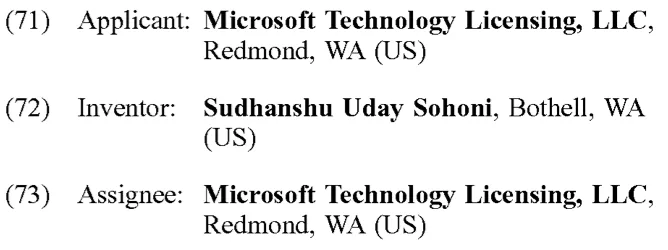
    Applicant, Inventor, and Assignee (INIDs 71–73)

    From page 1:

      The roles are distinct:

      Applicant
      The entity that filed the patent application.

      Inventor
      The individual who conceived the invention.

      Assignee
      The party that owns the patent rights.

      The assignee listed on the front page reflects ownership as recorded with the USPTO at issuance, though assignments may occur before or after grant.

      In corporate practice, the applicant and assignee often coincide.

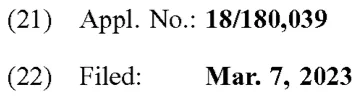
      Application Number and Filing Date (INIDs 21 and 22)

      The filing date is central to 35 U.S.C. §102 prior art analysis and patent term calculation.

      For most utility patents, the base term runs 20 years from the earliest effective non-provisional filing date, subject to PTA and disclaimers.

      Priority Information (INID 60)

      Priority claims may establish an earliest effective filing date for prior-art purposes under 35 U.S.C. §102.

      Priority chains may include:

      • provisional applications
      • continuations
      • divisionals
      • foreign priority filings

      The earliest valid priority date often determines the scope of relevant prior art.

      Publication Data (INID 65)

      “A1” denotes a published patent application.

      This allows you to locate the pre-grant publication (PGPub) and review earlier disclosures or prosecution history.

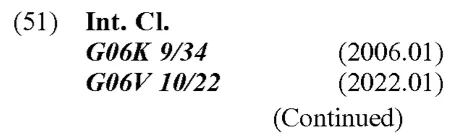
      Classification Codes: IPC and CPC (INIDs 51 and 52)

      Patent classification systems are structured taxonomies used to organize global patent disclosures. They are critical for searching, analytics, and portfolio strategy.

      Two classification systems appear on modern U.S. patents.

      International Patent Classification (IPC) — INID (51)

      The International Patent Classification (IPC) is administered by WIPO under the Strasbourg Agreement Concerning the International Patent Classification.

      Authoritative IPC resources:

      IPC divides technology into hierarchical sections, classes, subclasses, and groups.

      Examples from this patent include:

      The notation in parentheses — e.g., (2006.01) or (2022.01) — identifies the IPC version (edition) in force when that classification definition applied.

      IPC provides global harmonization across IPC provides a globally harmonized classification structure across patent offices.

      Cooperative Patent Classification (CPC) — INID (52)

      The Cooperative Patent Classification (CPC) system is jointly administered by the USPTO and the European Patent Office.

      Official CPC resources:

      CPC builds on IPC but adds substantially more granularity. It is the dominant search framework used by examiners and practitioners in the U.S. and Europe.

      Examples in this patent include:

      The parenthetical notation indicates the CPC scheme version in force when the classification was assigned. Because CPC definitions evolve over time, the version identifier indicates which classification scheme applied.

      Additional IPC and CPC entries may continue onto subsequent bibliographic pages.

      Why Classification Matters

      For practitioners:

      • Classification affects USPTO art unit assignment.
      • CPC codes are often more effective than keywords for prior art searching.
      • Portfolio analysis frequently relies on CPC clustering.
      • Examiner-selected classifications signal how the invention was technically characterized.

      Classification codes are not merely administrative — they are operational tools embedded into the patent system.

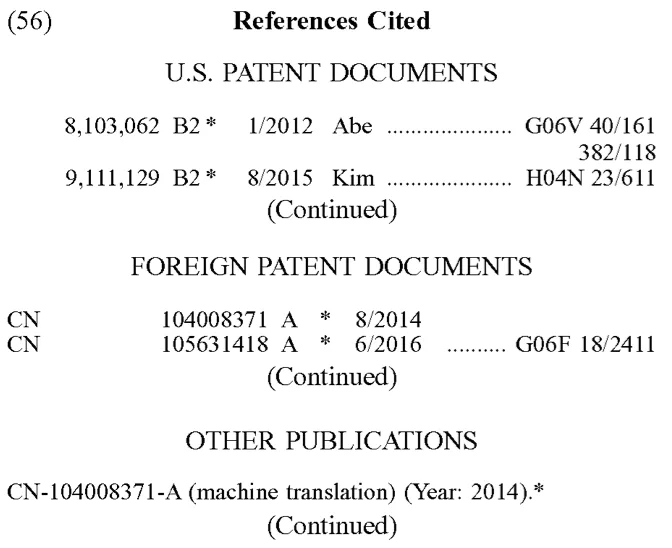
      References Cited (INID 56)

      In this patent,

      Page 1 lists U.S. and foreign patent references as well as Other Publications known as non-patent literature (NPL).

      Page 2 continues with additional patent and NPL references.

      These are references considered during examination. They are not necessarily the closest prior art, but they provide a structured starting point for:

      • invalidity analysis
      • prior art landscape review
      • citation network research

      Always confirm whether the citation list continues onto additional pages.

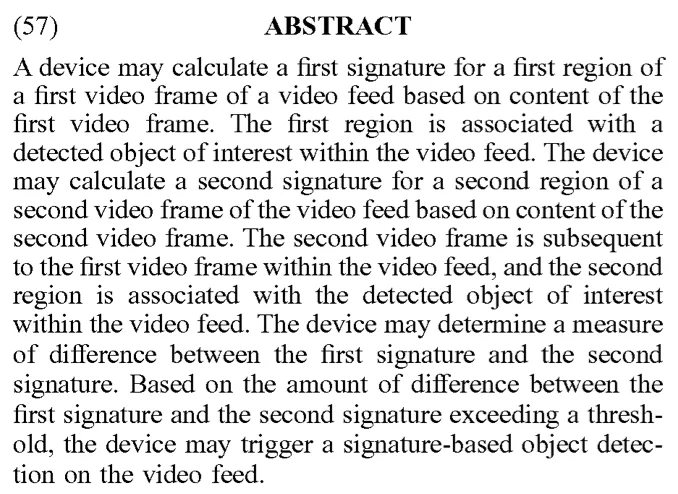
      Abstract (INID 57)

      Example:

      The abstract provides a short technical summary of the invention. It helps readers quickly understand the subject matter but does not define the legal scope of protection.

      The enforceable scope of the patent is defined exclusively in the claims.

      Claim Count and Drawing Sheets

      Page 1 indicates:

      This provides a quick sense of the patent’s complexity and disclosure scope.

      Many patents also include a representative drawing on the front page illustrating a key embodiment of the invention.

      Why the Patent Front Page Matters

      Many readers skip the front page and go directly to the claims or specification. That may be a mistake.

      The front page is a compressed legal and technical summary. In a standardized format, it reveals:

      • the earliest effective filing date and priority claims
      • the remaining patent term, including any PTA
      • ownership at issuance
      • the technological field as classified by the patent office
      • the prior art considered during examination
      • whether the application was previously published

      Before reading anything else, you can already evaluate strategic posture: how old the invention is, whether it is likely enforceable, how crowded the technical field appears, and where the examiner placed it within the classification system.

      For prosecution, the front page frames search strategy.

      For litigation, it informs expiration analysis and prior art review.

      For diligence, it provides immediate ownership and term context.

      The patent front page is not boilerplate. It is a structured data sheet governed by international standards. If you learn to read it carefully, you can extract most of the high-level strategic information in minutes — and decide whether deeper analysis is worth your time.

    • How to Read a U.S. Patent Number: A Complete Guide to Patent Number Formats

      What Does a U.S. Patent Number Look Like?

      A U.S. patent number identifies a specific patent document published or issued by the USPTO. Patent numbers appear in several formats depending on where the document falls in the patent lifecycle.

      Common examples include:

      • Granted patents: US 12,345,678 B2
      • Published applications: US 2024/0123456 A1
      • Design patents: USD1,000,000
      • Plant patents: USPP11,740

      Each format reveals both the type of patent document and its stage in the patent process.

      If you’ve ever typed a patent number into a search field and gotten an error, you know the frustration. U.S. patent numbers come in several formats depending on the type of patent and whether the document is an application, publication, or granted patent.

      Understanding the difference isn’t just trivia — it determines where you search, what you retrieve, and how you cite the document.

      This guide explains every major U.S. patent number format, what each part means, and how to use them when searching patent databases.

      Before Publication: Patent Application Numbers

      Every patent begins as a filed patent application. At the time of filing, the USPTO assigns the application an application number, sometimes called an application serial number.

      Example:

      16/123,456

      This number identifies the application throughout the examination process and remains associated with the invention even after it later receives a publication number or patent number.

      Breaking it down:

      16 — the series code. The USPTO uses two digits to identify the filing era of the application. The series number increments roughly every million applications filed. Most modern utility applications are now filed in series 18. Older applications appear in earlier series such as 15, 14, or 07.

      123,456 — the six-digit serial number, assigned sequentially within the series.

      Application numbers are typically written with a slash:

      16/123,456

      Some systems omit the slash:

      16123456

      Unlike publication numbers or patent numbers, application numbers do not have kind codes, and they usually cannot be used directly to retrieve a patent PDF from public search tools.

      You will encounter application numbers primarily in:

      Once an application becomes public, it receives its first publication number, described below.

      Patent Number vs Application Number: What’s the Difference?

      A common source of confusion is the difference between a patent number and a patent application number. They refer to different stages of the patent lifecycle.

      Application number

      • assigned when a patent application is filed
      • used during examination
      • example: 16/123,456

      Patent number

      • assigned only after a patent is granted
      • identifies the final issued patent
      • example: US 12,345,678 B2

      Applications also receive a publication number when the application becomes public.

      Example:

      US 2024/0123456 A1

      So a single invention may have three identifiers over its lifecycle:

      StageIdentifier
      Filed application16/123,456
      Published applicationUS 2024/0123456 A1
      Granted patentUS 12,345,678 B2

      Many patent search errors occur when someone attempts to search for a patent using an application number in a database that expects a publication or patent number.

      Pre-Grant Publication Numbers (PGPubs)

      About 18 months after the earliest priority date, most patent applications are published by the USPTO.

      At that point the application receives a pre-grant publication number.

      Example:

      US 2024/0123456 A1

      Breaking it down:

      • US — country code
      • 2024 — year of publication
      • 0123456 — seven-digit sequential publication number
      • A1 — the kind code

      Common publication kind codes include:

      • A1 — standard publication
      • A2 — second publication of the application
      • A9 — corrected publication

      The official USPTO format includes the slash:

      2024/0123456

      Many databases instead use a continuous format:

      US20240123456A1

      Both formats identify the same document.

      U.S. Utility Patent Numbers (Granted Patents)

      If an application is examined and allowed, the USPTO issues it as a granted patent and assigns a new patent number.

      Example:

      US 12,345,678 B2

      Breaking it down:

      • US — country code
      • 12,345,678 — sequential patent number
      • B2 — grant kind code

      The USPTO issued its 10-millionth patent in 2018, so modern patents commonly exceed 10,000,000.

      In most databases the commas and country prefix are optional. These all refer to the same patent:

      • US12345678
      • US 12,345,678
      • 12345678

      What Does “B2” Mean on a Patent?

      Many people search for “what does B2 mean on a patent number.”

      The B2 is a kind code that describes the publication stage of the patent document.

      In the U.S. system:

      • B1 — patent issued without a previously published application
      • B2 — patent issued after the application was published

      Kind codes follow the WIPO ST.16 international standard, which identifies the type of patent document and its publication status.

      Design Patent Numbers

      Design patents protect the ornamental appearance of an object.

      They use a D prefix.

      Example:

      US D1,000,000 S

      Older design patents were often cited as:

      Des. 350,000

      Modern design patents now exceed D1,000,000.

      The S kind code indicates a granted design patent, although many databases simply cite design patents using the USD format.

      Plant Patent Numbers

      Plant patents cover asexually reproduced plant varieties.

      Their numbers use a PP prefix.

      Example:

      US PP11,740

      Plant patents are relatively uncommon compared to utility patents.

      Reissue Patent Numbers

      A reissue patent corrects an error in an already issued patent.

      These patents use an RE prefix.

      Example:

      US RE37,014

      A reissue replaces the original patent while preserving the original patent number for reference.

      Statutory Invention Registrations (SIRs)

      Statutory Invention Registrations allowed inventors to publish inventions as prior art without receiving a patent.

      They use an H prefix.

      Example:

      H0002234

      The American Inventors Protection Act of 1999 eliminated the SIR program, so these numbers appear only in older patent literature.

      Quick Reference: U.S. Patent Number Formats

      FormatExample
      Application Number16/123,456 (administrative identifier)
      Pre-Grant PublicationUS 2024/0123456 A1
      Utility PatentUS 12,345,678 B2
      Design PatentUS D1,000,000 S
      Plant PatentUS PP11,740
      Reissue PatentUS RE37,014
      Statutory Invention RegistrationH0002234

      Practical Tips for Searching Patent Numbers

      USPTO Patent Public Search (PPUBS) accepts both slash format (2024/0123456) and continuous format (US20240123456A1).

      Google Patents is a forgiving search engine and usually finds documents regardless of formatting.

      When possible, include the kind code. The same number sequence may exist as both a publication (A1) and a granted patent (B2).

      Download the Patents You’ve Found

      Need to download a batch of patents as PDFs?

      PatPDFs lets you bulk download official USPTO patent PDFs by publication number or grant number in seconds — no login required.

      If you need deeper patent analysis, Patent Toolkit (patenttk.com) provides bulk downloads by application number, OCR-optimized patent text, DOCX export for AI workflows, and a full lookup tool covering bibliographic data, file wrappers, continuity chains, and assignment records.