
A patent front page is not merely a cover sheet. It is a standardized bibliographic record governed by international rules. If you know how to read it, you can determine priority, ownership, classification, cited prior art, and procedural posture in minutes.
A patent front page contains standardized metadata used worldwide. This includes INID codes (e.g., (10), (45), (51)), filing and issue dates, assignees, IPC and CPC classification codes, references cited, and patent term adjustment (PTA). Learning each field helps you assess priority, ownership, and technical scope quickly.
The front page provides metadata and context for understanding a patent — it does not, by itself, define what the patent legally protects. The enforceable scope is defined in the claims section further into the document.
We will use U.S. Patent No. 12,573,201 B2 as an example:

Applicability to Published Patent Applications
Although this article focuses on granted patents, the same front-page bibliographic structure generally applies to published patent applications (often called “pgpubs”).
U.S. patent application publications use the same bibliographic structure and the same INID code system. The key differences are the document identifiers and kind codes. For example:
- A1 / A2 / A9 — published patent application
- B1 / B2 — issued patent
Aside from these differences, the front page of a published application contains the same categories of information: filing data, priority claims, classification codes, references cited, and the abstract.
Once you understand how to read the front page of a granted patent, you can apply the same approach to published applications.
INID Codes: What They Are and Why They Matter
The numbers in parentheses — (10), (45), (54), (71), etc. — are INID codes, meaning Internationally agreed Numbers for the Identification of Data.
They are standardized under WIPO Standard ST.9, titled Recommendation Concerning Bibliographic Data on and Relating to Patents and SPCs. This WIPO standard governs how patent offices label bibliographic data worldwide.
Because of ST.9:
- (10) identifies the patent number
- (45) identifies the date of the patent
- (54) identifies the title
- (71), (72), (73) identify applicant, inventor, and assignee
- (21), (22), (60) identify application and priority data
- (51), (52) identify classification systems
- (56) identifies references cited
- (57) identifies the abstract
Once you recognize these codes, you can navigate patents from any major jurisdiction using the same interpretive structure.
A Patent Front Page May Span Two or More Pages
Although commonly referred to as a single page, U.S. patent bibliographic data frequently spans two or more pages.
In this patent:
- Page 1 contains the core bibliographic information, classifications, abstract, and initial references.
- Page 2 continues the International Classifications and expands the References Cited section.
In other patents, additional pages may appear where there are extensive citations, multiple classifications, or numerous related applications.
This is not cosmetic. The complete list of cited prior art and certain classification data may appear only on subsequent pages. Always verify whether the bibliographic section continues.
Patent Number and Kind Code (INID 10)
The patent number appears as:

This conveys:
- US — jurisdiction
- 12,573,201 — sequential patent number
- B2 — granted patent previously published as an application
Kind codes distinguish between published applications (A1, A2, A9), issued patents (B1, B2), and other document types. They matter when tracing prosecution history and continuity.
If you want a deeper explanation of how these identifiers work, see our guide on how to read U.S. patent number formats.
Date of Patent (INID 45)

This is the grant date — not the filing date. It governs enforceability and interacts with patent term adjustment.
Patent Term Adjustment (PTA)
For U.S. utility patents, the baseline term is:
20 years from the earliest effective non-provisional U.S. filing date, subject to adjustments.
PTA compensates patentees for certain USPTO examination delays under 35 U.S.C. § 154(b).
PTA is typically printed on the front page near the issue information, often in language such as:
Subject to any disclaimer, the term of this patent is extended or adjusted under 35 U.S.C. 154(b) by ___ days.
This patent has 396 days of PTA:

When reviewing a front page, confirm:
- The earliest effective non-provisional filing date.
- Whether PTA days are listed.
- Whether a terminal disclaimer applies (which may cap the adjusted term).
PTA can materially extend enforceability beyond the nominal 20-year term. In litigation or transactional diligence, failing to check PTA can result in incorrect expiration analysis.
Applicant, Inventor, and Assignee (INIDs 71–73)
From page 1:
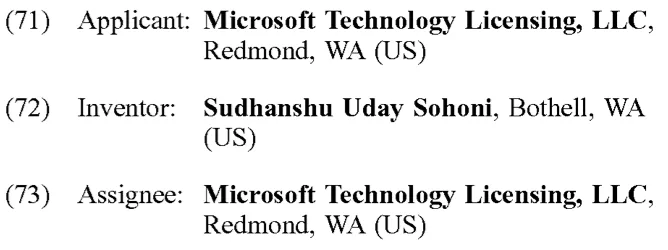
The roles are distinct:
Applicant
The entity that filed the patent application.
Inventor
The individual who conceived the invention.
Assignee
The party that owns the patent rights.
The assignee listed on the front page reflects ownership as recorded with the USPTO at issuance, though assignments may occur before or after grant.
In corporate practice, the applicant and assignee often coincide.
Application Number and Filing Date (INIDs 21 and 22)
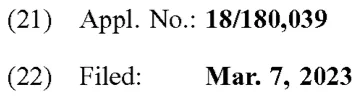
The filing date is central to 35 U.S.C. §102 prior art analysis and patent term calculation.
For most utility patents, the base term runs 20 years from the earliest effective non-provisional filing date, subject to PTA and disclaimers.
Priority Information (INID 60)

Priority claims may establish an earliest effective filing date for prior-art purposes under 35 U.S.C. §102.
Priority chains may include:
- provisional applications
- continuations
- divisionals
- foreign priority filings
The earliest valid priority date often determines the scope of relevant prior art.
Publication Data (INID 65)

“A1” denotes a published patent application.
This allows you to locate the pre-grant publication (PGPub) and review earlier disclosures or prosecution history.
Classification Codes: IPC and CPC (INIDs 51 and 52)
Patent classification systems are structured taxonomies used to organize global patent disclosures. They are critical for searching, analytics, and portfolio strategy.
Two classification systems appear on modern U.S. patents.
International Patent Classification (IPC) — INID (51)
The International Patent Classification (IPC) is administered by WIPO under the Strasbourg Agreement Concerning the International Patent Classification.
Authoritative IPC resources:
- https://www.wipo.int/classifications/ipc/
- https://www.wipo.int/treaties/en/classification/strasbourg/
IPC divides technology into hierarchical sections, classes, subclasses, and groups.
Examples from this patent include:
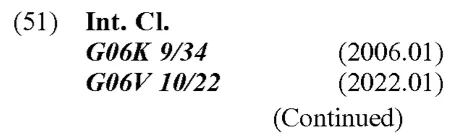
The notation in parentheses — e.g., (2006.01) or (2022.01) — identifies the IPC version (edition) in force when that classification definition applied.
IPC provides global harmonization across IPC provides a globally harmonized classification structure across patent offices.
Cooperative Patent Classification (CPC) — INID (52)
The Cooperative Patent Classification (CPC) system is jointly administered by the USPTO and the European Patent Office.
Official CPC resources:
- https://www.cooperativepatentclassification.org/
- https://www.uspto.gov/web/patents/classification/cpc.html
CPC builds on IPC but adds substantially more granularity. It is the dominant search framework used by examiners and practitioners in the U.S. and Europe.
Examples in this patent include:

The parenthetical notation indicates the CPC scheme version in force when the classification was assigned. Because CPC definitions evolve over time, the version identifier indicates which classification scheme applied.
Additional IPC and CPC entries may continue onto subsequent bibliographic pages.
Why Classification Matters
For practitioners:
- Classification affects USPTO art unit assignment.
- CPC codes are often more effective than keywords for prior art searching.
- Portfolio analysis frequently relies on CPC clustering.
- Examiner-selected classifications signal how the invention was technically characterized.
Classification codes are not merely administrative — they are operational tools embedded into the patent system.
References Cited (INID 56)
In this patent,
Page 1 lists U.S. and foreign patent references as well as Other Publications known as non-patent literature (NPL).
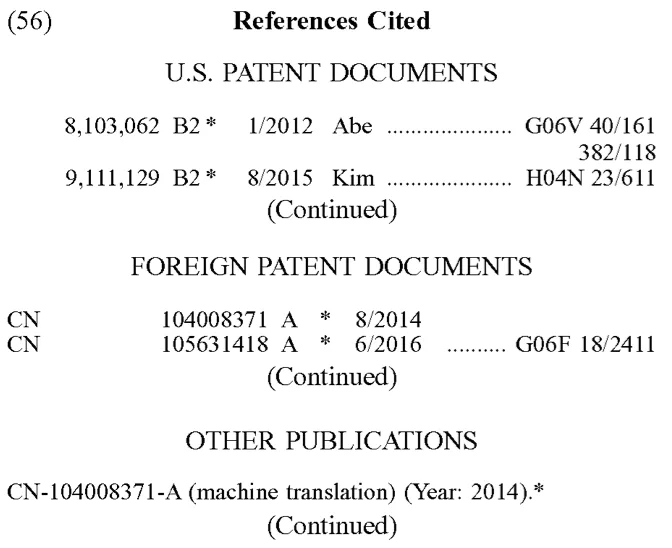
Page 2 continues with additional patent and NPL references.
These are references considered during examination. They are not necessarily the closest prior art, but they provide a structured starting point for:
- invalidity analysis
- prior art landscape review
- citation network research
Always confirm whether the citation list continues onto additional pages.
Abstract (INID 57)
Example:
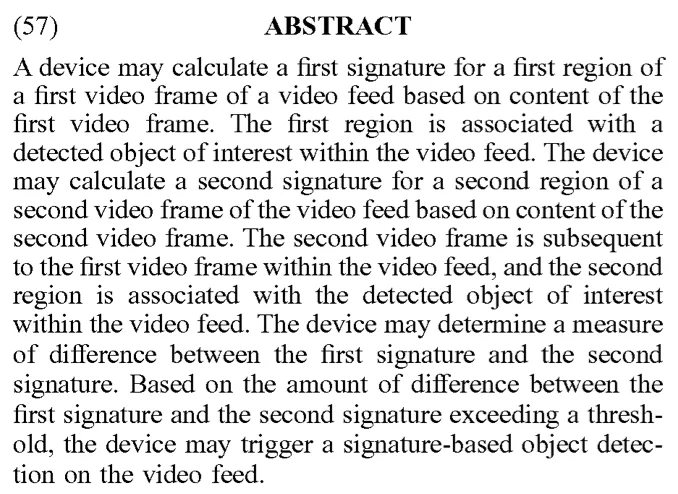
The abstract provides a short technical summary of the invention. It helps readers quickly understand the subject matter but does not define the legal scope of protection.
The enforceable scope of the patent is defined exclusively in the claims.
Claim Count and Drawing Sheets
Page 1 indicates:

This provides a quick sense of the patent’s complexity and disclosure scope.
Many patents also include a representative drawing on the front page illustrating a key embodiment of the invention.
Why the Patent Front Page Matters
Many readers skip the front page and go directly to the claims or specification. That may be a mistake.
The front page is a compressed legal and technical summary. In a standardized format, it reveals:
- the earliest effective filing date and priority claims
- the remaining patent term, including any PTA
- ownership at issuance
- the technological field as classified by the patent office
- the prior art considered during examination
- whether the application was previously published
Before reading anything else, you can already evaluate strategic posture: how old the invention is, whether it is likely enforceable, how crowded the technical field appears, and where the examiner placed it within the classification system.
For prosecution, the front page frames search strategy.
For litigation, it informs expiration analysis and prior art review.
For diligence, it provides immediate ownership and term context.
The patent front page is not boilerplate. It is a structured data sheet governed by international standards. If you learn to read it carefully, you can extract most of the high-level strategic information in minutes — and decide whether deeper analysis is worth your time.